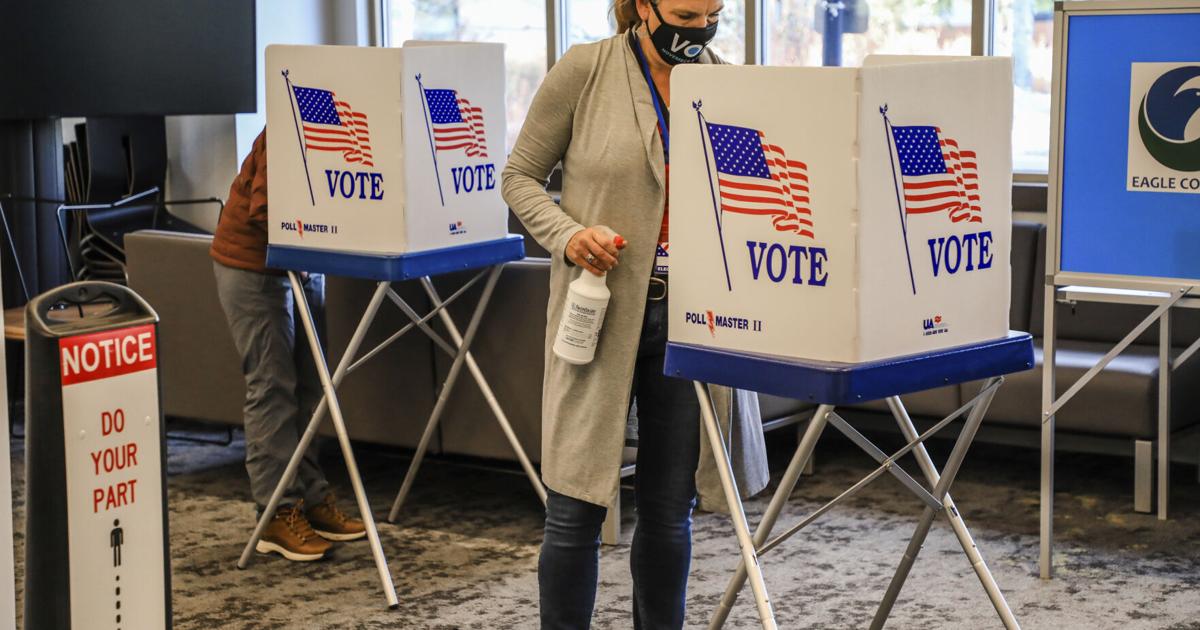
Attorney General Phil Weiser on Monday issued an advisory outlining acts of voter intimidation, which, his office noted, carry a fine of up to $1,000 or up to 364 days of jail time.
“Coloradans have the right to a free and fair election,” Weiser said in a statement. “Whether someone chooses to vote via mail, at a ballot drop box, or in person at a polling center, they and those who are ensuring the security of those votes should feel safe to participate in our democratic process.”
He added: “My office will hold accountable anyone who should attempt to interfere.”
Weiser issued the advisory on the first day that mail-in ballots were sent out to voters in Colorado. County clerks must receive the ballots by 7 p.m. June 28, the day of the primary.
Weiser’s office said it received nearly 50 complaints of voter intimidation during the 2020 election cycle, including the case of a trailer park owner who told tenants their rent would likely double if they voted a certain way.
Voter intimidation comes in many forms, the advisory noted.
It includes threatening voters outright with harm if they don’t vote for a certain candidate, as well as “aggressively confronting” them with questions about their qualifications to cast a ballot. Intimidation also includes invading voters’ space to frighten or pressure them to cast their ballot in a certain direction; yelling at or harassing them in order to cause them to not vote or to vote a certain way; and “menacingly blocking” or standing next to a polling center’s door to discourage voters from entering.
The advisory noted it’s illegal for anyone to campaign for a candidate or ballot measure inside a polling center or within 100 feet of the building where a polling center is located. Voter intimidation can also occur outside of a polling center, such as when sending voters deliberately false information about voting locations in a text message or calling voters to say they must have an ID card or get vaccinated in order to vote.
The advisory added that it’s illegal to openly carry a gun at a polling location or within 100 feet of a ballot drop-box or in any building where a polling location is located. The prohibition does not apply to uniformed security guards or peace officers. It also does not apply to concealed carry firearms.
Finally, the advisory emphasized doxxing election workers is illegal, such as by deliberately posting their personal information on the Internet when doing so poses an imminent and serious threat and the person who posted the information is or should have been aware of that threat.