

Glenn Youngkin, a Republican business executive, marched to victory in Tuesday’s election, delivering his party the governorship of Virginia and highlighting a strong night for Republicans less than a year after voters pushed them fully out of power in the nation’s capital.
The outcome in Virginia, combined with an unexpectedly close contest in New Jersey, where the governor’s race remained too close to call, delivered a jolt of encouragement for Republicans and a stark warning sign for the Democrats less than 10 months into President Biden’s term.
Mr. Biden’s approval rating has sagged to new lows as Democrats on Capitol Hill have struggled to coalesce behind his legislative agenda. The latest election results suggested an ominous erosion of the support in the suburbs that had put the party in power.
Here are five takeaways from Tuesday’s contests and what the results could mean for 2022, when control of the House, Senate and 36 governorships will be on the ballot:
Youngkin’s success across the state offers a G.O.P. pathway.
Republicans suffered repeated down-ballot losses in the past four years, as the party grappled with how to motivate a base deeply yoked to Donald J. Trump without alienating the suburban voters who came to reject the former president’s divisive style of politics.
Enter Glenn Youngkin and his fleece vest.
Mr. Youngkin pulled off something of a surprise and rare feat: He drove up the Republican margins in white and rural parts of the state further than Mr. Trump had, cutting into the edge of the Democratic nominee, former Gov. Terry McAuliffe, in suburban areas. He even flipped some key counties entirely.
Mr. Youngkin won in Chesterfield County, outside of Richmond, and Stafford County, an exurb of Washington, D.C., both places that Mr. Biden carried in 2020.
And in conservative southwestern Virginia, Mr. Youngkin was topping 80 percent in heavily white and rural counties — up substantially from the Republican showing in the last governor’s race.

SHIFT IN MARGIN
From the 2020 presidential election
More Democratic
More Republican

SHIFT IN MARGIN
From the 2020
presidential election
More
Democratic
More
Republican

Circle size is proportional to the amount each county’s leading candidate is ahead

Circle size is proportional to the amount each
county’s leading candidate is ahead
Mr. Youngkin had campaigned heavily on education and seized on Mr. McAuliffe’s remark that he didn’t “believe parents should be telling schools what they should teach.” Mr. Youngkin used the comment, made during a debate, as an entryway to hammer his rival on issues like race and transgender rights in schools. The issues simultaneously motivated the G.O.P. base while casting the matter to moderates as an issue of parental rights.
“This is no longer a campaign,” Mr. Youngkin said. “It is a movement being led by Virginia’s parents.”
Republican strategists were downright gleeful about the possibility of repackaging Mr. Trump’s policies without his personality.
All politics are presidential. But Biden loomed larger than Trump.
To the extent that the Youngkin victory provided a fresh G.O.P. blueprint, the surprisingly strong showing in New Jersey by the Republican candidate, Jack Ciattarelli, who was virtually tied with Gov. Phil Murphy, a Democrat, made plain that the political environment had seriously degraded for Democrats nationally.
A national NBC News poll in late October showed that 45 percent of registered voters approved of the job Mr. Biden was doing, compared with 52 percent who disapproved. Perhaps as ominous was the intensity gap: Far more voters strongly disapproved of Mr. Biden (44 percent) than strongly approved (19 percent).
Such diminished standing offered Republicans an opportunity even in traditionally blue territory.
In Virginia, the McAuliffe campaign had relentlessly tried to make the race about Trump, Trump, Trump — in its television ads and on the stump.
That represented quite the reversal from when Democrats took back the House in 2018. Then, party strategists warned candidates to talk about issues, not Mr. Trump. But with him out of office, the McAuliffe team believed he needed to draw in Mr. Trump more explicitly.
It didn’t work.
“We’ve never had an election about a former president,” said Brad Todd, a Republican strategist who works on Virginia campaigns. He noted that more than 10,000 ads had tried to link Mr. Trump and Mr. Youngkin. “Current elections are about the current president,” Mr. Todd said.
Strategists in both parties said that the Virginia race was heavily shaped by Mr. Biden’s falling approval rating, and that the downward Democratic trajectory had begun when the president stumbled through the troubled pullout of American troops from Afghanistan.
Mr. McAuliffe and the Democrats never recovered.
Despite Democratic efforts to goad Mr. Trump into visiting the state, he never did so, allowing Mr. Youngkin to create some political distance — and to remain unencumbered by Mr. Trump’s usual demands of public fealty.
Some Republicans credited Susie Wiles, who is now overseeing Mr. Trump’s political operation, for helping guide Mr. Trump toward the approach. Others half-jokingly credited the social media platforms that banished Mr. Trump this year, muffling the impact and curtailing the frequency of his musings.
The G.O.P. margins make it even more worrisome for Democrats in 2022.
The headline, of course, is that Mr. Youngkin won. But for political strategists focused on the midterms in 2022, his final margin — and specifics about where his campaign excelled and Mr. McAuliffe underperformed — is every bit as revealing about the trajectory of the two parties.
Think of it this way: Because Mr. Biden carried Virginia by 10 percentage points in 2020, a Youngkin victory represents a Republican improvement of more than 10 percentage points in exactly one year.
That is a lot — even knowing Virginia’s history of delivering its governorship to the party out of power in the White House.
Just as worrisome for the Democrats is that of the 36 governorships up for grabs in 2022, eight are now held by Democrats in states that had a smaller Democratic margin of victory in 2020 than Virginia, according to an election memo for donors from the Republican Governors Association. That list includes three of the most crucial presidential battlegrounds: Pennsylvania, Michigan and Wisconsin.
The picture in the House is just as bleak for Democrats.
Patrick Ruffini, a Republican pollster, noted that if a roughly 10-point swing — about the gain Mr. Youngkin needed to win in Virginia — were applied to the 2020 House results in districts nationwide, Republicans would have picked up 38 House seats.
Strategists in both parties said that unless the political environment improved for Democrats, they were at risk of losing both the House and Senate in 2022.
“This election is a warning for all Democrats,” declared Guy Cecil, who leads one of the party’s largest super PACs.
There were other weak down-ballot results for the party on Tuesday.
In Pennsylvania, the Republican candidate won a Supreme Court seat in a state Mr. Biden won. In Ohio, Mike Carey, a Republican, won the 15th Congressional District and was leading by more than Mr. Trump carried that district in 2020. And in the New York City suburbs on Long Island, a Republican was handily beating the incumbent Democratic district attorney in Suffolk County. In nearby Nassau County, Republicans led the races for district attorney and county executive.
The political middle still matters.
The American electorate is increasingly polarized, and a shrinking sliver of voters oscillates between the two major parties. But those voters still matter. For every vote that flips to the other side, a campaign must find two new voters to make up for the lost ground.
For years, it was the Democrats in Virginia who were obsessed with cutting into the margins in Republican strongholds and the suburbs.
Mark Warner, now a senator, famously slapped his name on the side of a NASCAR truck when he ran for governor as a Democrat in 2001. Tim Kaine, the state’s other senator, ran radio ads in his 2005 bid for governor that touted his work as a “former Christian missionary” and his support of abortion restrictions. Even Mr. McAuliffe himself ran in 2013 as a jobs-obsessed economic moderate who thanked the “historic number of Republicans who crossed party lines” to vote for him.
Yet in 2021, Mr. McAuliffe ran as a mainline Democrat. He deployed Joe Biden, Kamala Harris, Barack Obama and Stacey Abrams in a bid to rally his party’s partisan faithful.
If Mr. McAuliffe was seemingly singularly obsessed with his base, the Youngkin campaign homed in on an issue that Democrats typically dominate: education. That focus helped him make incursions into Democratic territory.
The emphasis wasn’t just rhetorical. Mr. Youngkin’s two most frequently aired general election television ads were about schools and specifically Mr. McAuliffe’s debate remark. Those ads represented a full 28 percent of his total airings for the entire campaign, according to an analysis by AdImpact, a media-tracking firm.
Democratic ideological factions face off in cities.
Several municipal races pitted the progressive and moderate wings of the Democratic Party. The contests offered mixed results.
In Buffalo, India Walton, who was seeking to become a rare democratic socialist elected to a mayoralty, was trailing the write-in campaign led by Mayor Byron Brown, whom she had defeated in the Democratic primary.
In Minneapolis, voters rejected an amendment to transform the city’s Police Department into a new Department of Public Safety. At the same time, the city’s moderate Democratic incumbent mayor, Jacob Frey, held a significant advantage after the first round of ranked-choice voting.
In Seattle, Bruce Harrell, a former City Council president, was leading his more progressive rival, Lorena González.
The left did score some wins. In Boston, Michelle Wu, who was running with the backing of progressives, won the mayor’s race. And in Cleveland, Justin Bibb, a 34-year-old with progressive backing, is set to become mayor as well.


CHANTILLY, Va. — Glenn Youngkin spoke publicly for the first time since his upset victory in the Virginia governor’s race was called by The Associated Press early Wednesday morning.
“We won this thing,” Mr. Youngkin said after bounding out onstage in Chantilly just after 1 a.m., clapping along to the blues-rock anthem “Spirit in the Sky.”
“Together we will change the trajectory of this commonwealth,” he said. “And friends, we are going to start that transformation on Day 1. There is no time to waste. Our kids can’t wait.”
In his relatively brief remarks, he returned to one of the central promises of his campaign: to give parents more rights over what their children learn in school.
“We’re going to embrace our parents, not ignore them,” Mr. Youngkin said, in an apparent reference to a comment made by his Democratic opponent, Terry McAuliffe. That single remark haunted Mr. McAuliffe in the final stage of the campaign and helped Mr. Youngkin tap into parents’ anger over local school boards.
In their second and final debate in September, Mr. McAuliffe said, “I don’t think parents should be telling schools what they should teach.” Mr. Youngkin immediately crafted a television ad highlighting the remark, though he stripped the quotation of its context.

There’s still no decision in New Jersey, where the count is close and the data is murky. But county by county, it’s becoming clear that there are still a lot of Democratic-leaning mail ballots left. That might be enough for Murphy.
President Biden just touched down at Joint Base Andrews after his trip to Rome and Glasgow, returning from the rarified heights of foreign summitry to a sour, gridlocked Washington riven with Democratic infighting.

School board races don’t normally generate much excitement, but around the country this year they’ve become flash points for controversy, drawing national advertising and outside money in what Republicans promoted as a blueprint for energizing suburban voters in next year’s midterm elections.
Yet Tuesday’s results suggest that the school issues advanced by conservative candidates — notably a rejection of race, diversity and inclusion lessons in schools — might not be sure bet for swinging suburban voters red.
In one of the most contentious and closely-watched votes on Tuesday, incumbents in an affluent suburb of Milwaukee beat back a recall effort by a conservative slate of candidates who had attacked the district’s efforts to teach racial equity and diversity.
The four incumbents on the Mequon-Thiensville School Board soundly defeated their Republican challengers by wide margins, final vote tallies showed. The results delivered a setback to the state’s Republicans, who had openly campaigned for the conservative slate of candidates in the attempted recall of the four school board members — a departure from a Wisconsin tradition of nonpartisan school elections.
Among the group’s most vocal Republican supporters was a former lieutenant governor, Rebecca Kleefisch, who has announced her candidacy for governor in 2022. Ms. Kleefisch had attended a campaign rally for the group last Friday.
The conservative slate, led by a former stay-at-home mother, Scarlett Johnson, also had attracted outside money from Republican megadonor Dick Uihlein and assistance from two well-funded conservative organizations. (Ms. Johnson lost to the incumbent Chris Shultz, garnering 4,748 votes to Ms. Schultz’s 6,816.)
Reacting to the vote, the state’s Democratic Party chairman, Ben Wikler, accused the Republicans of resorting to fear-mongering and division. Mr. Wikler said the vote reflected a “total rejection of a kind of radical politics that parents aren’t looking for.”
Looking toward the 2022 midterm elections, Wisconsin Republicans had hoped that opposition to so-called “critical race theory” could energize the party’s base in suburban areas like the Mequon-Thiensville School District, part of affluent Ozaukee County, an area that is historically Republican but that has recently trended toward Democrats.
The conservative slate had run on a platform opposed to the theory, a term that has become a surrogate for curriculum that addresses racial equity and diversity.
Critical race theory is an academic framework generally used in higher education that views racism as ingrained in law and in various institutions. Educators say it is not generally taught in K-12 schools.
Still, the topic had generated controversy in school board elections around the country this year, according to the organization Ballotpedia, which said it identified 92 school districts in 22 states where candidates took a stance on the issue.
The fears over critical race theory were stoked by several national groups. One New York-based political action committee, the 1776 Project, had raised several hundred thousand dollars to support school board candidates who opposed critical race theory.
With returns just coming in from other races Tuesday night, no clear trend had emerged revealing how the race curriculum opponents fared.
In the Kansas City suburbs, it appeared that at least one of the candidates endorsed by the 1776 Project was on the path to winning a seat in the Blue Valley district in Overland Park, Ks. The conservative candidate, Kaety Bowers, who operates a cosmetic tattoo business, was defeating Andrew Van Der Laan, a business consultant who had run on a more moderate platform.
In northern Ohio, where another anti-critical race theory group, Ohio Value Voters, had endorsed candidates in several districts, returns were not complete. But in Chagrin Falls, an eastern suburb of Cleveland, the organization’s slate of three candidates was defeated.

In his victory speech, Youngkin focused once again on schools, promising “choice within the public school system” and curriculum that teaches children “how to think.” Education, mixed with race, became one of the most salient issues in the campaign.
Youngkin was the big story in Virginia, but the state also elected its first Black woman lieutenant governor and its first Latino attorney general, both Republicans.

Phil Murphy, New Jersey’s Democratic governor, and his Republican challenger, Jack Ciattarelli, addressed supporters almost simultaneously early Wednesday. Both said it will take more time to count all the vote-by-mail and provisional ballots.
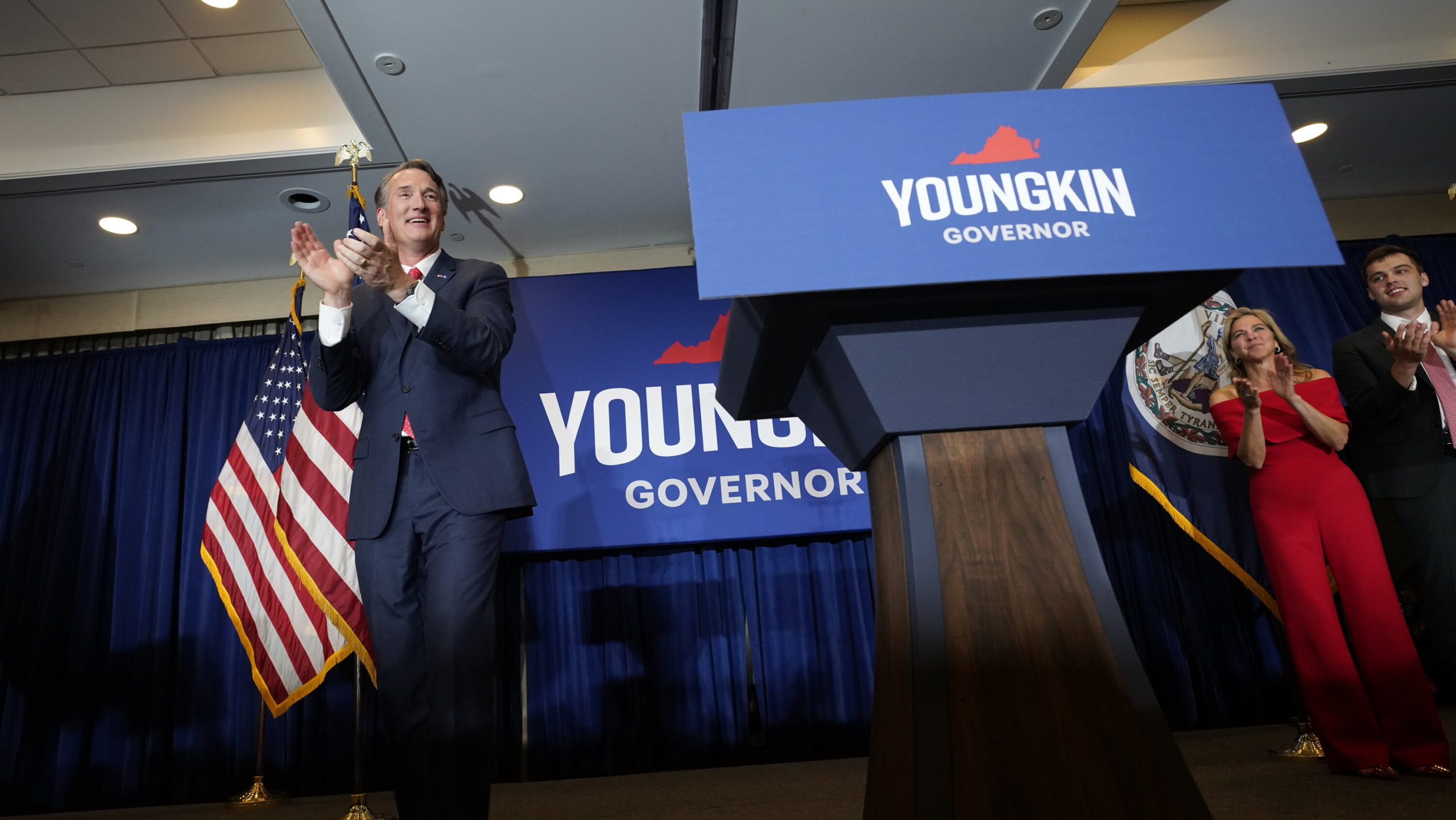
McLEAN, Va. — Republicans claimed the governorship of Virginia for the first time in more than a decade on Wednesday, electing the businessman Glenn Youngkin and presenting their party with a formula for how to exploit President Biden’s vulnerabilities and evade the shadow of Donald J. Trump in Democratic-leaning states.
Mr. Youngkin, 54, a wealthy former private equity executive making his first run for office, elevated education and taxes while projecting a suburban-dad demeanor to demonstrate he was different from Mr. Trump without saying so outright. He defeated former Gov. Terry McAuliffe, a Democrat who, with Mr. Trump out of office, struggled to generate enthusiasm among liberals at a moment when conservatives are energized in opposition to Mr. Biden.
The Associated Press called the race for Mr. Youngkin shortly after 12:30 a.m. Wednesday morning, hours after the polls closed on Tuesday night.
Addressing supporters in Northern Virginia, Mr. Youngkin said the state had reached “a defining moment.”
“Together we will change the trajectory of this commonwealth,” Mr. Youngkin said after taking the stage and clapping along to the blues-rock anthem “Spirit in the Sky.”
The election took place at a moment when voters are deeply frustrated, weary from the still-lingering coronavirus pandemic and irritated at the costs and scarcity of goods. Large majorities in polls say that the country is on the wrong track, a foreboding indicator for the party in power.
No less bracing for Democrats was a second gubernatorial election unfolding in New Jersey: the incumbent governor, Philip D. Murphy, was narrowly trailing a relatively obscure Republican challenger, Jack Ciattarelli, deep into the night. A mainstream liberal with ties to the White House, Mr. Murphy was staking his hopes for a comeback on a strong performance in several solidly Democratic areas where votes were slow to report.
But the unexpected closeness of the race underscored the overall vulnerability of the Democratic Party. Much like Mr. Youngkin in Virginia, Mr. Ciattarelli appeared to benefit from robust turnout in rural and conservative-leaning areas of the state while making inroads in denser areas such as Bergen County, the populous suburb of New York City.
Unlike Mr. Youngkin, Mr. Ciattarelli, a former state legislator, had no vast personal fortune to spend on his candidacy and national Republicans looked at his campaign as an extreme long shot. Even if Mr. Murphy prevails, it is certain to be by a minute fraction of the 16-point margins by which both he and Mr. Biden carried the state in their last campaigns.
Mr. Youngkin’s surprise victory in Virginia, however, represents the starkest warning yet that Democrats are in danger. It was likely to prompt additional congressional retirements, intensify the intraparty tug of war over Mr. Biden’s agenda and fuel fears that a midterm electoral wave and Mr. Trump’s return as a candidate are all but inevitable.
“The MAGA movement is bigger and stronger than ever before,” Mr. Trump said in a statement Tuesday night.
In the first competitive statewide election of Mr. Biden’s presidency, Mr. McAuliffe worked assiduously to link Mr. Youngkin to the previous president. Inviting a parade of prominent national Democrats to campaign with him, the former governor sought to nationalize the race and effectively transform a gubernatorial contest into a referendum on Mr. Trump in a state he lost by 10 points last year.
But voters appeared far more eager to register their frustration with the Democrats in control of Washington and Richmond, the state capital, and fissures appeared in the coalition of moderate whites, people of color and young liberals that elected Mr. Biden in 2020. In cities, suburbs and exurbs that Mr. Biden had handily carried, Mr. McAuliffe’s margins shrank dramatically.
Mr. McAuliffe never fully articulated his own vision for a second term and received no favors from Mr. Biden or his party’s lawmakers. They spent much of the fall locked in contentious negotiations over Mr. Biden’s infrastructure and social welfare proposals, failing to reach a consensus that could have at least offered Mr. McAuliffe some good news to trumpet.
Democrats in Virginia have tended to win statewide elections on a message of can-do pragmatism. The stalemate in Washington cast the party in a different light.
Taking the stage in McLean before the race was called, Mr. McAuliffe thanked his family and supporters but did not concede. “This is a different state,” he said of Virginia following his governorship and that of his successor, Gov. Ralph S. Northam. “We are going to continue that fight.”
Significantly, Mr. Trump appeared unusually content to be kept at arm’s length by Mr. Youngkin, remaining mostly silent as the Republican candidate declined to invite him to the state. Mr. McAuliffe even acknowledged to reporters on Monday that “from a political perspective” it would have been better for him had the former president not been banished from Twitter so Mr. Trump could have had a platform from which to insert himself into the campaign.
For Republicans, particularly those uneasy with Mr. Trump and battered by the party’s string of losses on his watch, Mr. Youngkin’s triumph delivered a moment of exultation. Their win in Virginia demonstrated that they can reclaim some suburban voters without fully embracing or rejecting Mr. Trump.
Clad in a fleece vest and sporting a smile on the campaign trail, Mr. Youngkin happily claimed support from so-called Never Trumpers and Forever Trumpers, while otherwise voicing a center-right agenda in a state where Republicans have not won statewide since 2009.
In part because Mr. McAuliffe was so dedicated to his strategy of inserting Mr. Trump into the race, Mr. Youngkin evaded scrutiny about his own views on policy, which on issues like abortion and same-sex marriage were to the right of most Virginia voters.
The race illustrated that voters are chiefly focused on day-to-day quality of life issues related to the economy and the pandemic, and they blame Democrats for failing to fully address these matters.
The Virginia results also suggest that Mr. Trump’s exit has at least loosened the Democrats’ hold on the college-educated voters who powered their gains over the last five years.
It’s highly unlikely, however, that the former president will let other Republicans sidestep him in next year’s midterm elections the way Mr. Youngkin did. The party’s victory in Virginia may only lull Republicans into believing that Mr. Trump no longer poses a dilemma and can be indefinitely averted, the sort of thinking many party leaders have clung to for more than six years.
For now, though, it’s Democrats who will suffer the most as their moderate-versus-liberal intraparty tensions flare in Washington and beyond and officials blame one another for the defeat.
Susan Swecker, the chairwoman of the Democratic Party of Virginia, was blunt in her criticism of national Democrats for their losses on Tuesday. “I would encourage those people across the river that could pass legislation to give relief to working families that maybe they better wake up and think about what next year is going to look like now,” Ms. Swecker said.
However, even before polls closed Tuesday, one senior adviser to Mr. Biden was fuming over talking points issued by the Democratic Governors Association, which pointed to the president’s dimming popularity. It was not Mr. Biden, this adviser said, but Mr. McAuliffe who handed Republicans a political weapon as they sought to tap into parents’ anger over local school boards.
The moment came in a September debate, when Mr. McAuliffe said, “I don’t think parents should be telling schools what they should teach.”
For Democrats, part of the reason the loss was so painful was because it was so familiar.
The last time a Republican won the Virginia governorship, in 2009, the party’s nominee rode a backlash against President Barack Obama to a 17-point victory, carrying densely populated suburbs like Fairfax County in Northern Virginia. That victory presaged a Republican wave the following year that turned over control of the House to the G.O.P. and stymied Mr. Obama for the balance of his time in office.
It was a scenario that Democrats fear could come to pass again in 2022 unless Mr. Biden regains voter confidence.

The World Series ends — and so have the mayoral ambitions of Bobby Valentine, who concedes to Democrat Caroline Simmons in Stamford, Conn.

A Republican won a highly competitive district attorney race on Long Island that was seen as a key test of Democratic strength in the suburbs and support for left-leaning criminal justice measures.
Timothy Sini, the Democratic incumbent in Suffolk County, conceded to Raymond Tierney, the Republican challenger, late Tuesday night.
Just west in Nassau County — in another district attorney race seen as a similar test for Democrats — Anne Donnelly, a first-time Republican candidate, declared victory. However, The Associated Press has not called the race for her, and the Democratic candidate, State Senator Todd Kaminsky, has not conceded.
Both races, outside New York City, were seen as bellwethers of the Democratic Party’s standing in the suburbs, and they may have national resonance for Republicans as they seek to regain control of Congress in next year’s midterm elections.
In Nassau, Democrats entered the race with high hopes of keeping the seat blue — it has been held by a Democrat since 2006 — but party insiders grew increasingly nervous as Election Day approached and Republicans waged what appeared to be an effective campaign attacking Mr. Kaminsky for supporting the state’s contentious bail law in 2019.
There are more registered Democrats than Republicans in Nassau County, though more Republicans tend to vote in off-year elections, a trend that was apparently amplified on Tuesday.
Mr. Kaminsky, a former federal prosecutor and third-term state senator from Long Beach, was widely seen as the favorite at the outset of the race. A legislator since 2015, he had wider name recognition than Ms. Donnelly and a deep well of financial support.
But Ms. Donnelly, a first-time candidate who was virtually unknown to voters, spent aggressively on mailers and digital ads that attacked Mr. Kaminsky for supporting the bail law, which stopped criminal courts from setting cash bail on most misdemeanors and nonviolent felonies. She was also endorsed by a coalition of law enforcement unions and by the editorial board of Newsday, the largest daily newspaper on Long Island.
The race quickly turned into one of the most competitive in a state where Democrats were expected to win most of the top offices on Tuesday, with each camp spending millions of dollars and accusing the other of lying.
As Democrats try and make sense of the wreckage tonight, one fact stands out as one of the easiest explanations: Joe Biden has lower approval ratings at this stage of his presidency than nearly any president in the era of modern polling.
An example of the difficulty in New Jersey is Bergen County, where Republicans may — or may not — be on track to hold on to their lead. One election document says they’ve counted heavily Democratic mail votes; another says they haven’t.

Minneapolis’ rejection of a referendum to replace their police department will not end the conversation over reforming law enforcement there. Voters largely agreed that policing needs to change. They were less sure about how to do it.
In the reddest part of Virginia, its southwestern coal country, Youngkin is getting a slightly higher percentage of the vote than Trump did in several counties in 2020. 80-85+ percent tonight.

In Atlanta, front-runner Felicia Moore, the city council president and a longtime critic of former mayor Kasim Reed, will advance to a runoff. But Mr. Reed and councilman Andre Dickens are fighting for the No. 2 spot.

BUFFALO, N.Y. —Mayor Byron W. Brown of Buffalo, an incumbent four-term Democrat, declared victory on Tuesday night in his write-in campaign to defeat his own party’s official nominee, India Walton. But Ms. Walton refused to concede.
The results were far from final in a race that drew national attention for reflecting the ideological schism in the Democratic Party: With nearly 70 percent of the vote counted, about 60 percent of the votes so far were marked for “write-In,” and many of those could eventually translate into votes for Brown, though that process of counting will be laborious and could take weeks to finish.
Ms. Walton, a democratic socialist who had earned the endorsements of some of the nation’s best-known progressives, said on Tuesday night that “every vote needs to be counted” and railed against the Brown campaign, which did not reject support from Republicans, a small cohort in this heavily Democratic city.
“Right now it’s ‘Walton’ against ‘Write In,’ whoever that is,” she said. “Who Write-In is remains to be seen.”
Indeed, there is at least one other write-in candidate who has actively campaigned — Benjamin Carlisle, a former Democrat. Ballots marked “write-in” will have to be checked individually to see which candidate — Mr. Brown, Mr. Carlisle, or others — is indicated. And absentee ballots will not be tallied until mid-November.
Still, the results on Tuesday seemed to boost the hopes and mood of Mr. Brown, who lost to Ms. Walton in a Democratic primary in June, after running a lackluster campaign.
“They said it was impossible to win as a write-in, but you can never count a Buffalonian out,” said Mr. Brown said to a raucous crowd at a downtown event, adding he would find a way to thank all his voters “over the next four years.”
“This hasn’t been easy,” he said. “But it’s been worth it.”
The political oddity of a potent write-in campaign and a battle pitting moderates versus progressives inside the Democratic Party turned this city’s usually lackluster mayoral race into one of the most closely watched contests in the nation.
Mr. Brown, 63, was seeking a fifth term, trying to cobble together a varied coalition of conservative and moderate Democratic supporters, as well as managing the vicissitudes of a write-in campaign, including spending $100,000 to buy specially made rubber stamps to allow voters to ink his name on ballots.
On Tuesday, such a process didn’t seem to discourage Brown supporters like Fred Heinle, 66, who voted for the mayor and said, “Byron Brown has done a lot of tremendous things for the city.
“Has he been perfect? No,” said Mr. Heinle, who is retired. “But he’s done some wonderful very good things for the city to be proud of.”
In her remarks, Ms. Walton accused Mr. Brown of betraying the Democratic Party and benefiting from deep-pocketed donors who poured money through independent expenditure committees. And indeed, some local Republican officials — who are badly outnumbered in voter registration in Buffalo and did not even field a candidate for mayor — did voice support for Mr. Brown’s campaign.
“Buffalo is a Democratic city,” Ms. Walton said on Tuesday night. “And what we have seen is my opponent actively cooperating and colluding with Republicans and dark money to defeat a person who was going to be a champion for the little guy.”
A win for Mr. Brown — the city’s first Black mayor and a lifelong Democratic centrist — would be a stinging rebuke for the progressive wing of his party, which had celebrated Ms. Walton’s unlikely victory in June.
In many ways, Ms. Walton’s candidacy has underscored a deeper rift in the Democratic Party, which has seen moderates like President Biden and Eric Adams, who easily won his election for New York City mayor on Tuesday, repeatedly scuffle with more left-leaning candidates and elected officials.
Since winning in June, Ms. Walton had drawn the support of a bevy of prominent national progressives, including Senator Bernie Sanders of Vermont and Senator Elizabeth Warren of Massachusetts, as well as Representative Alexandria Ocasio-Cortez, who represents parts of Queens and the Bronx but traveled to Buffalo in late October to campaign on Ms. Walton’s behalf.
She had also begun to draw the support of more Democratic establishment figures, including both of the state’s U.S. senators — Chuck Schumer and Kirsten Gillibrand — who could face challengers from the left in future election cycles.
Still, Ms. Walton was not uniformly embraced by state party leadership, as Gov. Kathy Hochul — a Buffalo native — and Jay S. Jacobs, the chairman of the New York State Democratic Committee, declined to endorse her.
In the closing weeks of the campaign, Mr. Jacobs had come under particular fire after suggesting Ms. Walton’s win in the primary was akin to an infamous white supremacist, David Duke, winning his party’s nomination. (Mr. Jacobs, who heard calls for his resignation, later apologized.)
Ms. Walton, 39, was tying to become the first woman and first Black woman to lead New York’s second largest city, as well as the first socialist to lead a major American city in decades. A first-time candidate, she has an evocative life story as a single mother and labor organizer — a narrative that she leaned on in advertisements, some of which were paid for by groups like the Working Families Party, a labor-backed organization that often supports progressive candidates.
She had run an energetic primary campaign, surprising Mr. Brown, who largely refused to acknowledge her candidacy, having won past campaigns comfortably in a city in which Democrats far outnumber Republicans.
The mayor’s blasé attitude changed radically, however, after Ms. Walton’s win, as he announced his write-in campaign and attempted a legal push to get himself put on the ballot. That effort failed after a pair of judges ruled against Mr. Brown in September, leaving Ms. Walton the only candidate whose name was on the ballot.
As the campaign continued, political observers here repeatedly suggested that Mr. Brown could be a favorite, if only because of his 16 years in office and widespread name recognition.
But on Tuesday, some of Ms. Walton’s supporters said they both liked her policies and had tired of Mr. Brown’s long time in office.
“No one is owed a position in public service,” said Matthew L. Schwartz, 37, social worker in Buffalo. “I don’t understand why he feels he has the pulse of the community.”
Mr. Brown seemed confident in the days before the election, joking on Sunday about the potentially notable nature of his win as well as his rubber stamps.
“There’s a growing feeling,” he said, “that the stamps are going to become collectors’ items.”
Lauren D’Avolio and Dan Higgins contributed reporting from Buffalo.

In Great Falls, Mont., Mayor Bob Kelly cruised to re-election over his challenger, Fred Burow. Mr. Kelly is a supporter of the local effort to create a National Heritage Area. Mr. Burrow has opposed the proposal and trumpeted disinformation about it.

Brad Lander will be New York City’s next comptroller, according to the AP. He and his ally, Public Advocate Jumaane Williams, are are expected to form a left-leaning coalition, possibly in opposition to Mayor-elect Eric Adams, who is closer to the political center.

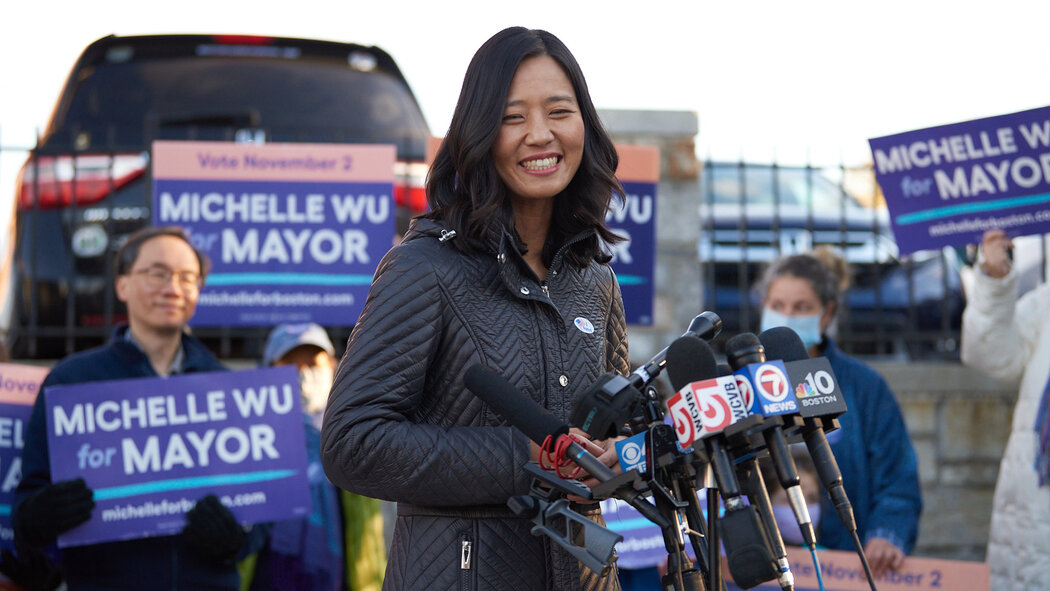
BOSTON — Michelle Wu, who entered public service out of frustration with the obstacles that her immigrant family faced, will be the next mayor of Boston, pledging to make the city a proving ground for progressive policy.
Buoyed by support from the city’s young, left-leaning voters and by Black, Asian and Latino residents, Ms. Wu, 36, soundly defeated City Councilor Annissa Essaibi George.
Ms. Essaibi George, who ran as a pragmatic centrist in the style of former Mayor Martin J. Walsh, had the backing of the city’s traditional power centers, like its police, its trade unions and its working-class Irish American neighborhoods.
“From every corner of our city, Boston has spoken,” Ms. Wu said, to a jubilant crowd in the city’s South End. “We are ready to meet the moment. We are ready to be a Boston for everyone.”
Conceding the race, Ms. Essaibi George said, “I want to offer a great big congratulations to Michelle Wu.”
“She is the first woman, first person of color, and as an Asian American, the first elected to be mayor of Boston,” she said. “I know this is no small feat.”
Ms. Wu — who grew up outside Chicago and moved to the Boston area to attend Harvard — was an unusual candidate for this city, and her victory sets a number of precedents.
Ms. Wu is the first woman and the first person of color to be elected mayor in Boston, which has been led by an unbroken string of Irish American or Italian American men since the 1930s. Kim Janey, a Black woman, has served as acting mayor since March, when Mr. Walsh was confirmed as the U.S. labor secretary. Ms. Wu will also be the first mayor of Boston not born in the city since 1925.
Malaysia Fuller-Staten, 24, an organizer from Roxbury, was ebullient as returns came in, saying the scale of Ms. Wu’s victory would shatter the image of Boston as conservative and insular.
“Boston is so much an old boys’ club,” she said. “For her to win by that margin, it would be saying to everyone, Boston is not a center-right city. It would be saying, we are a city looking to change.”
Born shortly after her parents immigrated to the United States from Taiwan, Ms. Wu spent her childhood interpreting for them as they tried to negotiate bureaucracy in the United States. She was deeply shaken in her 20s, when her mother had a mental health crisis, forcing her to step away from her career to care for the family.
Emerging from that experience, she plunged into a career in public service.
She developed a close relationship with Elizabeth Warren, one of her professors at Harvard Law School, who became the state’s progressive standard-bearer and helped launch her in politics.
As a Boston city councilor, Ms. Wu often attended meetings with her babies, a sight that announced change for a body that, throughout its history, had been dominated by white men.
State Representative Aaron Michlewitz, a longtime friend and supporter, described Ms. Wu’s victory as the culmination of years of disciplined work on the nitty-gritty of governing.
“It’s not always flashy, it’s not always something that gets a headline,” he said. “She doesn’t come off as this huge presence when she walks into a room necessarily. But over time she chips away at the issues you care about. You start realizing how dedicated she is to the craft and to the work.”
Boston has been booming, as jobs in technology, medicine and education attract waves of young professionals. But that success has come at a cost, forcing working-class and middle-class families to leave the city in search of affordable housing.
Ms. Wu has promised to push back against gentrification, with policies tailored to help lower-income residents stay in the city, such as waiving fees for public transport, imposing a form of rent control, and reapportioning city contracts to firms owned by Black Bostonians.
It will not be easy for her to deliver. Rent control, for example, has been illegal in Massachusetts since 1994, so restoring it would require the passage of statewide legislation. The most recent effort to roll back the ban on rent control was rejected resoundingly by legislators last year, by a vote of 23 to 136.
Her plans to restructure the city’s planning agency have worried many in the real estate and building sectors, which thrived while Mr. Walsh was mayor. And Ms. Wu will have to take control of a sprawling government apparatus whose powerful constituencies can slow or block a new mayor’s agenda.
Wilnelia Rivera, a political consultant who supported Ms. Wu, said she would face pushback.
“The reality about power is that it never wants to give up any, and we’ll see what that looks like once we cross that bridge,” she said. “She is going to have to recreate that power coalition. It would be nice to have a mayor who isn’t necessarily in the back pocket of all the power players in the city.”
Ms. Wu comes in with high expectations for change, and will face pressure to move swiftly. One of the city’s most popular progressive figures, District Attorney Rachael Rollins of Suffolk County, warned that she ran the risk of disappointing many who have backed her.
“What I won’t do is allow our community to be sold a bill of goods and then when someone gets into the office, nothing happens,” she said.
Ms. Wu has responded repeatedly to such concerns throughout her campaign.
“The history and legacy of Boston as a city is one of putting forward bold vision to reshape what’s possible and then fighting for what our residents need,” she said, listing challenges she took on as a city councilor, like introducing a pilot program for fare-free public transport.
“Time and again, when people said it would be impossible,” she said, “we got it done.”
As they left polling places on Tuesday, several voters described the race as a turning point for Boston, which has elected a long line of men from the white, working-class, pro-union wing of the Democratic Party.
“Change in this city has taken a long time to come,” said Andrew Conant, 28, a filmmaker. “This is a very proud moment for my city.”
Historic night in Durham, N.C., where Elaine O’Neal, a former interim dean of N.C. Central University Law School, will become the city’s first Black woman mayor.

In the Democratic primary for Florida’s 20th Congressional District, Sheila Cherfilus-McCormick leads Dale Holness by a mere 31 votes. That would trigger an automatic recount for the heavily Democratic seat in Broward and Palm Beach counties.
Diane Allen, Jack Ciattarelli’s Republican running-mate in New Jersey, just addressed an energized G.O.P. crowd watching results arrive slowly. “We feel good,” she said. “Let’s continue.”
Felicia Moore, a candidate for mayor in Atlanta, hugged supporters at her election night watch party in Downtown Atlanta.
Terry McAuliffe, who did not concede defeat in his brief remarks, will not be speaking again tonight, an aide said.
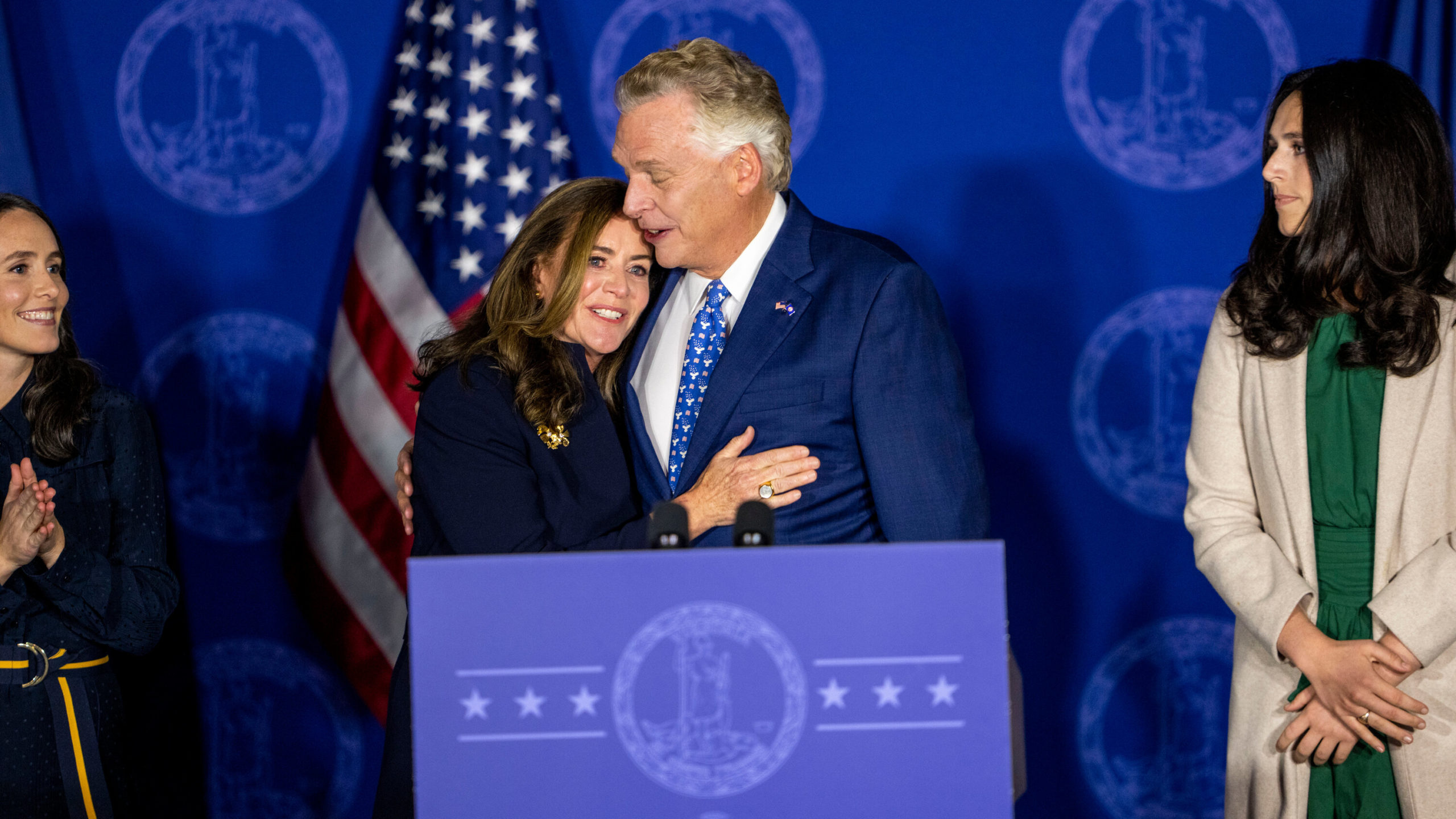
Despite trailing in the Virginia governor’s race by four percentage points with nearly 90 percent of the vote counted, the Democratic candidate, Terry McAuliffe, did not concede to his Republican opponent, Glenn Youngkin, telling supporters to wait until all of the state’s votes are counted.
“We still got a lot of vote to count,” he said to a morose crowd in a ballroom in McLean, Va. “We’re going to continue to count the votes because every single Virginian deserves to have their vote counted.”
The former governor’s aides have for much of the evening cited outstanding votes from Fairfax County and Richmond, two heavily Democratic areas where Mr. McAuliffe has outperformed expectations. But across the rest of the state he has bled substantial support from Democratic performance during the years former President Donald J. Trump was in office.
Mr. McAuliffe, who spoke for four minutes, thanked his family and supporters before ticking through his campaign platform, but without any mention of Mr. Trump — who was a constant presence in his closing argument against Mr. Youngkin.
McAuliffe in a speech before supporters: “We still got a lot of vote to count, we have about 18 percent of the vote out, we’re going to continue to count the votes because every single Virginian deserves to have their vote counted.”

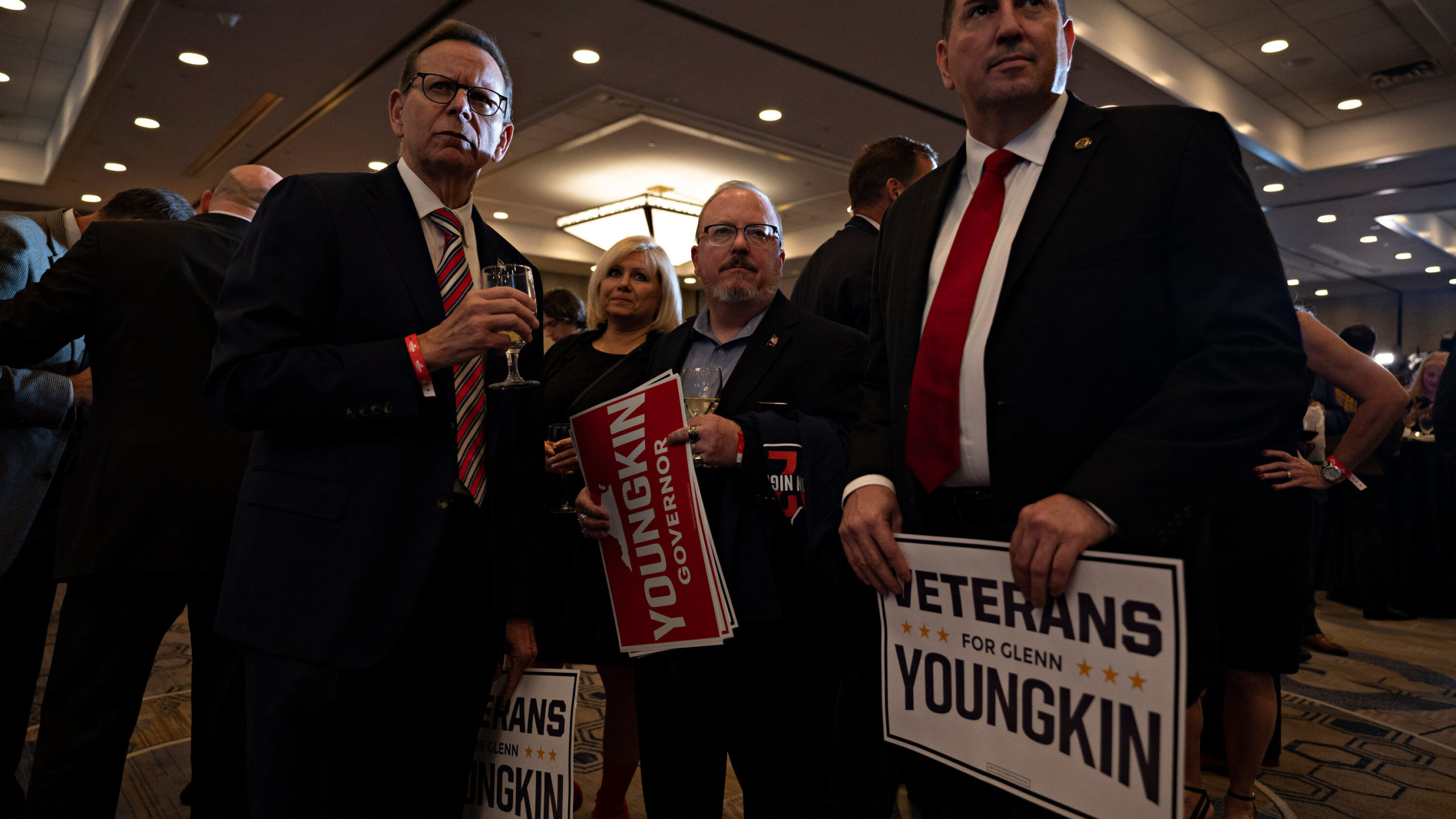
Terry McAuliffe supporters looked concerned while watching a big screen showing early returns at a watch party in Fairfax.
The failed referendum to replace the Minneapolis Police Department with a new public safety agency reflected a generational divide within the city’s Black community. Younger activists pushed for it. Some older leaders said it was too much of a gamble.
Supporters of New Jersey Gov. Phil Murphy have gathered at a party on the boardwalk in Asbury Park to watch the results come in.
MINNEAPOLIS — Minneapolis residents rejected an amendment on Tuesday that called for replacing the city’s long-troubled Police Department with a new Department of Public Safety, The Associated Press projected.
The ballot item emerged from anger after a Minneapolis police officer murdered George Floyd last year, galvanizing residents who saw the policing system as irredeemably broken. But the amendment’s failure showed that even in a liberal city where skepticism of the police runs deep, many Americans are not prepared to get rid of the police.
Minneapolis leaders now face the challenge of filling staffing shortages in a Police Department that is about a third smaller than it was before Mr. Floyd’s killing, and at a time when the city is facing the most homicides since the mid-1990s. Even though voters were bitterly divided over the charter amendment, the city has been largely united in a view that meaningful reforms to policing are needed.
“We all agree that we can’t sustain as we are now with the way policing has been,” said Brian Herron, the pastor of a church on the city’s North Side and an opponent of the amendment. But he added: “We don’t have time to reimagine. We got bodies dropping in the streets. We got innocent folk being killed.”
Supporters of the measure had framed it as an opportunity to rethink law enforcement and perhaps become a national model for a different approach.
“For every new change, someone had to be the first,” said Sheila Nezhad, who supported the amendment, and who decided to run for mayor after working as a street medic following Mr. Floyd’s death. “This is our opportunity to lead.”
In the days after Mr. Floyd’s murder, Minneapolis became the center of a push to defund or abolish the police, and the amendment on Tuesday’s ballot grew out of that. But while many in Minneapolis have deep concerns about the current policing system, the city was deeply divided on whether the ballot language went too far.
Moderate Democrats, including Mayor Jacob Frey, called for improving the current department. An uptick in homicides led some residents to question the wisdom of shedding the Police Department for a new public safety agency. And a lack of clarity on what the amendment would actually do scared off some voters.
“Policing is the No. 1 issue, but I don’t see my opinion reflected,” said Leanne Fanner, 54, who works in insurance and said before Election Day that she intended to vote against the measure. “I do think we need systemic reform of the Police Department — systemic and accountable reform.”
The amendment called for discarding minimum police staffing levels for the city, and getting rid of the Minneapolis Police Department altogether. Under the amendment, the City Council would have more oversight over the agency that replaced the Police Department, which would be focused on public health and, according to the ballot language, “could include licensed peace officers (police officers), if necessary.”
Supporters of the measure, who largely steered away from describing the plan as one to “defund the police,” framed it as a way to help their city move past the pain of the past 18 months and create a new, more equitable system. And they have disagreed with some opponents who say this is not a wise moment to replace the Police Department, given rising gun violence in the streets.
“I find it fascinating that folks are saying, ‘No, this is the wrong time to do things that directly address the things that are bad right now,’” said JaNaé Bates, a minister who helped lead a campaign supporting the amendment and believes that having more social workers and community violence workers would do a better job reducing gun violence than would traditional policing.
Many Minneapolis residents say they remain shaken by the events that unfolded in the city, from the video of an officer kneeling on Mr. Floyd’s neck, to the protests and arson and looting that followed.
“We are going through some of the hardest and most difficult circumstances our city has ever faced,” Mr. Frey told high school students during a debate this fall.
The question of how to respond has divided Minnesota’s top Democrats. Representative Ilhan Omar, whose congressional district includes Minneapolis, and Keith Ellison, the state attorney general, supported replacing the Police Department. Their fellow Democrats in the Senate, Amy Klobuchar and Tina Smith, opposed it.
Mayor Frey, who opposed the amendment, had received more than 40 percent of the first-choice votes in Tuesday’s mayor’s race with nearly all ballots counted, which was far more than any challenger but short of the majority threshold needed to win outright under the city’s ranked-choice system.
Since Mr. Floyd’s murder, many large cities, Minneapolis included, have invested more money in mental health services and experimented with dispatching social workers instead of armed officers to some emergency calls. Some departments scaled back minor traffic stops and arrests. And several cities cut police budgets amid the national call to defund, though some have since restored funding in response to rising gun violence and shifting politics.
But no large city went as far as getting rid of its police force and replacing it with something new.
Democrats may be poised for big disappointment in Virginia, but they do seem likely to hold on in New Jersey — even though the Republican leads at the moment. Virtually all the reported vote is from Republican areas.
Youngkin’s showing tonight is of interest to two possible Georgia governor’s candidates, Democrat Stacey Abrams and Republican David Perdue — who, like Youngkin, might seek to unite pro- and anti-Trump G.O.P. factions.

Mayor Mike Duggan of Detroit was elected to a third term on Tuesday, The Associated Press projected, as voters signaled confidence in the direction of a city that has suffered from decades of disinvestment and population loss.
Mr. Duggan, a Democrat who was elected eight years ago as the city was in the throes of municipal bankruptcy, has presided over a resurgence of Detroit’s commercial center and a restoration of basic city services like streetlights. New factories are opening, the Detroit Pistons basketball team moved back from the suburbs, and young college graduates have moved into downtown and Midtown, along with businesses catering to them.
“Eight years ago, the problems Detroit was facing were just Detroit — no other city was talking about bankruptcy or streetlights,” Mr. Duggan said earlier this year. “Today, the challenges that we’re dealing with, every other city has.”
But by Mr. Duggan’s own assessment, Detroit remains a work in progress. Violent crime is a persistent concern. Blighted and abandoned homes are a common sight, despite efforts to bulldoze or restore many buildings over the last decades. And some longtime residents, especially Black residents who stayed in Detroit through years of white flight to the suburbs, say they are concerned about gentrification as the white population grows and rents go up.
Mr. Duggan, the first white mayor in decades of a city where nearly 80 percent of residents are Black, has also so far failed to deliver on his promise to end more than half a century of population decline. Data from the 2020 census showed the population had fallen more than 10 percent since 2010, to about 639,000 residents. The white, Asian and Hispanic populations increased in that period, but there were tens of thousands fewer Black Detroiters in the city. The mayor has disputed that data and pledged to challenge the census figures.
Mr. Duggan’s opponent, Anthony Adams, a lawyer and fellow Democrat, focused his campaign on crime reduction, police reform and keeping longtime residents in the city. But he struggled to gain traction as local and national figures in the Democratic Party, including President Biden, gave their support to Mr. Duggan.
“We’re starting to lose our Black population in the city, and we’re losing it because the policies of this administration are harmful to the people who have been here through thick and thin,” Mr. Adams said in an interview this summer.
Alvin Bragg will become Manhattan’s first Black district attorney, according to the Associated Press. He will inherit a high-profile case against former President Donald J. Trump.

McLEAN, Va. — Former Gov. Terry McAuliffe is facing grim returns in nearly every sort of Virginia community in his battle with Glenn Youngkin, the Republican nominee for governor.
Mr. McAuliffe, a Democrat, is posting only modest margins in heavily Black, rural counties like Brunswick, an agricultural community along the North Carolina border. And he is losing worse than President Biden in more heavily white areas of southwestern Virginia, like Alleghany County, near West Virginia, where Mr. McAuliffe is capturing 21 percent of the vote.
More ominous for Mr. McAuliffe is that he is running well behind Mr. Biden, who won Virginia by 10 points last year, in exurban counties like Stafford, down Interstate 95 from Washington, D.C. Mr. McAuliffe is losing Stafford by about 20 points a year after Mr. Biden carried it by three.
If any more evidence is needed that bedroom communities are drifting back to the Republicans, consider Henrico County, outside Richmond: Mr. Biden won it by nearly 30 points. Mr. McAuliffe is winning it by about nine.

Alvin Bragg was elected Manhattan district attorney on Tuesday and will become the first Black person to lead the influential office, which handles tens of thousands of cases a year and is conducting a high-profile investigation into former President Donald J. Trump and his family business.
The Associated Press called the race for Mr. Bragg on Tuesday night.
Mr. Bragg, 48, a former federal prosecutor who campaigned on a pledge to balance public safety with fairness for all defendants, will succeed Cyrus R. Vance Jr., a Democrat who did not seek re-election.
“We have been given a profound trust tonight,” Mr. Bragg told a crowd gathered in the outdoor pavilion at Harlem Tavern, in the neighborhood where he has lived most of his life and that has served as the constant backdrop of his campaign over the last two years. “The fundamental role of the district attorney is to guarantee both fairness and safety.”
He said that under his administration the racial disparities in the system would be “shut down,” and mentioned personal experiences that would shape his perspective in office.
“I think I’ll probably be the first district attorney who’s had the police point a gun at him,” he said.
Mr. Bragg said dealing with the “humanitarian crisis” on Rikers Island was an urgent priority, and that included sending fewer people to jail.
Mr. Bragg had been heavily favored to prevail over his Republican opponent, Thomas Kenniff, given that Democrats vastly outnumber Republicans in the borough.
The Manhattan district attorney’s office continues to disproportionately prosecute Black defendants, and Mr. Bragg throughout his campaign has drawn on his personal experiences growing up in New York to illustrate the types of changes he wishes to make. Mr. Bragg has said he would show leniency to defendants who commit low-level crimes and has emphasized the importance of accountability for the police and the office’s prosecutors.
His victory comes as Democrats are seeking to balance sweeping changes to the criminal justice system with some voters’ concerns about rising gun crime. In 2020, millions of people around the country took to the streets to protest the police killings of George Floyd and Breonna Taylor and call for change. But after rises in homicides and shootings in New York and other cities, some voters have moderated their stances.
The most high-profile case confronting Mr. Bragg is the investigation into Mr. Trump and his family business. Over the summer, the business and one of its top executives were charged with running a yearslong tax scheme that helped executives evade taxes while compensating them with off-the-books benefits.
Mr. Vance’s investigation into Mr. Trump and his business is ongoing; Mr. Bragg has faced questions about it throughout his campaign and will continue to do so. Though he cited his experience of having sued the former president over 100 times while at the state attorney general’s office, Mr. Bragg has said he will follow the facts when it comes to the current inquiry.
Mr. Bragg voted Tuesday morning at the Wyatt T. Walker senior housing building on Frederick Douglass Boulevard in Harlem.
He said that voting for himself, the first time he has done so, had been humbling.
“Just to be engaged in our democracy from this new perspective has been so important to me, so meaningful on a personal level,” he said.
Mr. Bragg then drove to a polling place on 134th Street, where he was greeted by Jumaane D. Williams, the city public advocate; and Cordell Cleare, a Democratic State Senate candidate.
Upon seeing Mr. Bragg, Mr. Williams offered an enthusiastic greeting: “The D.A. is here!”

“We won,” shouted an Eric Adams staffer from the stage just 17 minutes after the polls closed in New York City.

Eric Adams, a former New York City police captain whose attention-grabbing persona and keen focus on racial justice fueled a decades-long career in public life, was elected on Tuesday as the 110th mayor of New York, and the second Black mayor in the city’s history.
The Associated Press declared victory for Mr. Adams, the Brooklyn borough president, 10 minutes after the polls closed at 9 p.m.
At his campaign celebration, held at the New York Marriott at the Brooklyn Bridge, just around the corner from his office at Brooklyn Borough Hall, Mr. Adams walked to the stage buoyantly to “The Champ Is Here” by Jadakiss less than an hour later, and urged New Yorkers to come together.
“We are so divided right now and we’re missing the beauty of our diversity,” Mr. Adams said in remarks that echoed the “gorgeous mosaic” that David N. Dinkins, New York’s first Black mayor, famously discussed. “Today we take off the intramural jersey and we put on one jersey: Team New York.”
Mr. Adams, who will take office as mayor on Jan. 1, faces a staggering set of challenges as the nation’s largest city grapples with the enduring consequences of the pandemic, including a precarious and unequal economic recovery and continuing concerns about crime and the quality of city life.
His victory signaled the start of a more center-left Democratic leadership that he has promised will reflect the needs of the working- and middle-class voters of color who delivered him the party’s nomination and were vital to his general election coalition.
Mr. Adams, whose victory over his Republican opponent, Curtis Sliwa, appeared to be resounding, will begin the job with significant political leverage: He was embraced by both Mayor Bill de Blasio, who sought to chart a more left-wing course for New York, and by centrist leaders like Michael R. Bloomberg, Mr. de Blasio’s predecessor.
Mr. Adams was the favored candidate of labor unions and wealthy donors. And he and Gov. Kathy Hochul — who joined him onstage at his victory party — have made clear that they intend to have a more productive relationship than Mr. de Blasio had with Andrew M. Cuomo when he was governor.
Mr. Adams has made clear that large companies have a role to play in shepherding the city’s recovery, and there are signs that he may have a far warmer relationship with business leaders than Mr. de Blasio, who won on a populist platform.
But on the campaign trail, there was no issue Mr. Adams discussed more than public safety.
Mr. Adams, who speaks about growing up poor in Queens, has said he was once a victim of police brutality and spent his early years in public life as a transit police officer and later a captain who pushed for changes from within the system.
During the primary, amid a spike in gun violence and jarring attacks on the subway, Mr. Adams emerged as one of his party’s most unflinching advocates for the police maintaining a robust role in preserving public safety. He often clashed with those who sought to scale back law enforcement’s power in favor of promoting greater investments in mental health and other social services.
Mr. Adams, who has said he has no tolerance for abusive officers, supports the restoration of a reformed plainclothes anti-crime unit. He opposes the abuse of stop-and-frisk policing tactics but sees a role for the practice in some circumstances. And he has called for a more visible police presence on the subways.
“We’re not going to just talk about safety,” Mr. Adams declared. “We’re going to have safety in our city.”
The polls have closed in New York City. We will know the outcome of the mayor’s race, and several down-ballot races, soon.
If Youngkin prevails, expect the two warring factions of the G.O.P. to both declare victory. “Never Trumpers” will claim this shows there’s a path without him. And Trump supporters will say he dragged Youngkin over the line.
Polls have closed in New York, ending a battle for the city’s mayoralty that was largely marked by a long, bitter Democratic primary and a contentious general-election campaign.
The Democratic nominee, Eric Adams, a former police officer and the current Brooklyn borough president, was widely expected to win the race, after a campaign sharply focused on the pandemic and public safety.